
The manufacturing journey
From rough to finished diamond.
Eight chapters. Many decisions. Follow the material through our craft, and understand what changes at every stage.
Begin with the rough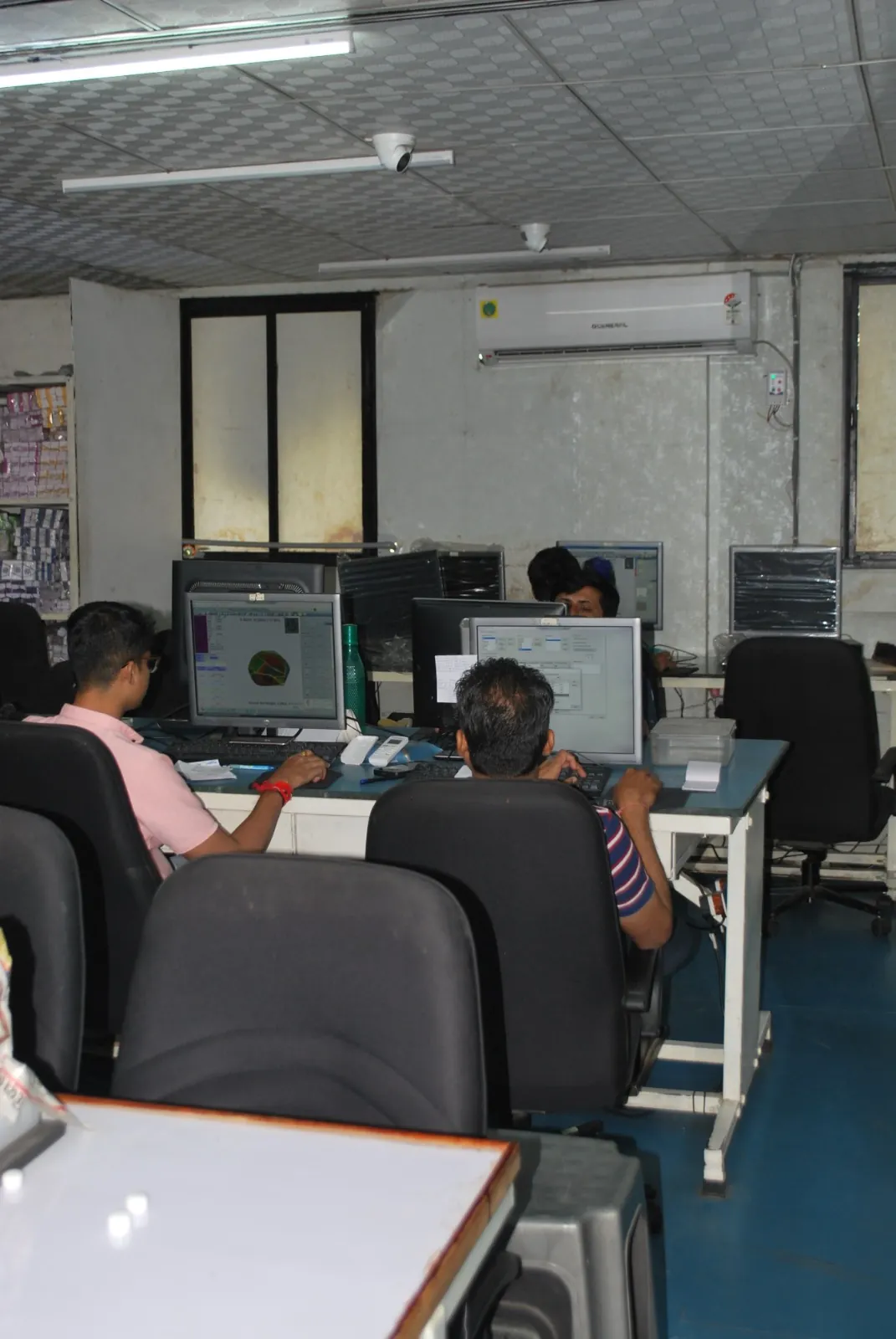
Source
Begin with the material.
Laboratory-grown rough arrives from upstream growers. Material identity and the information accompanying each parcel establish the starting point. Sitaram purchases rough; crystal growth happens before our manufacturing work begins.
A defined parcel, ready for evaluation.
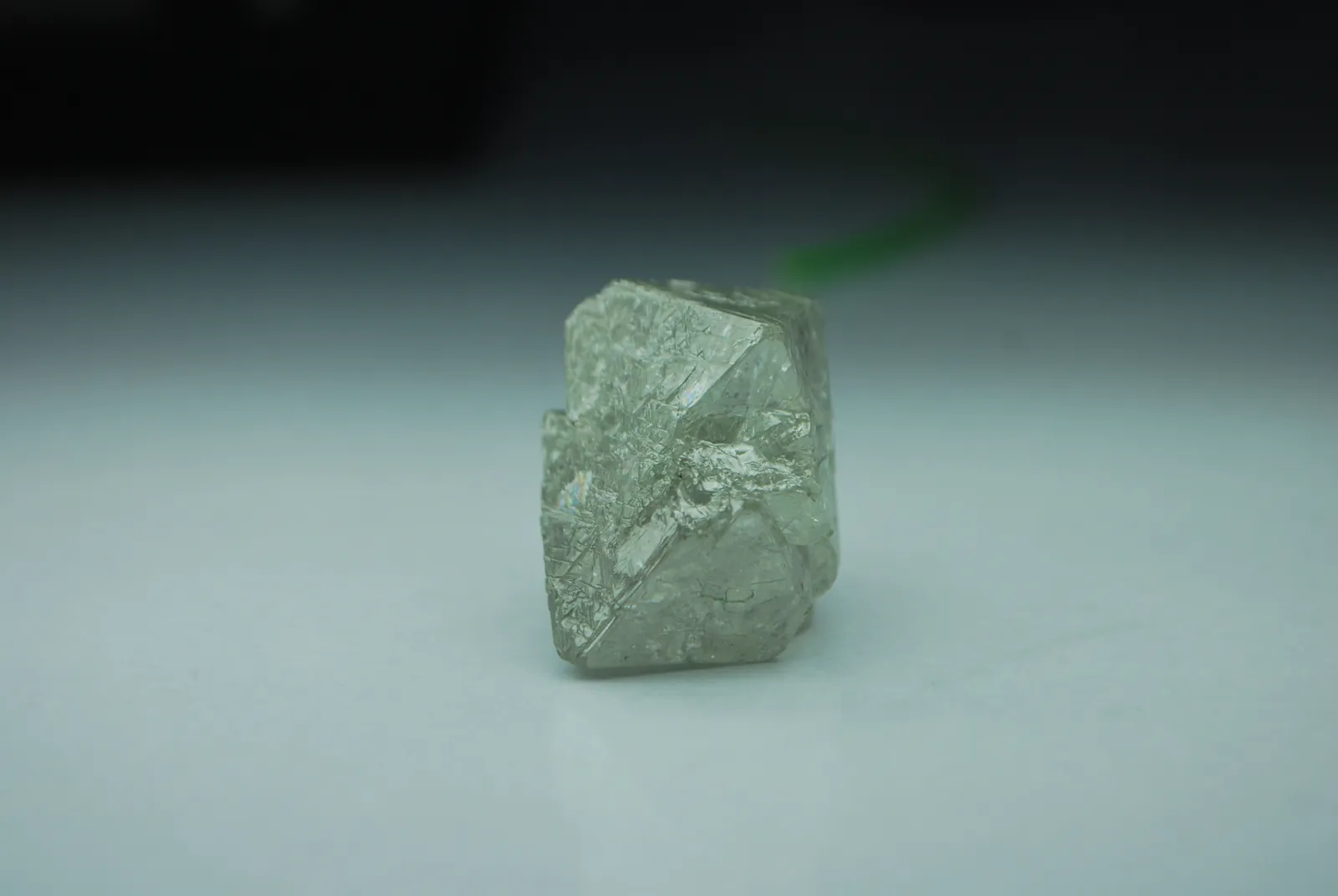
Map
Understand what is inside.
Scanning and close examination help the planner understand the exterior and internal characteristics. The shape of the rough and the position of visible features guide the next decision.
Information that makes a cutting decision possible.
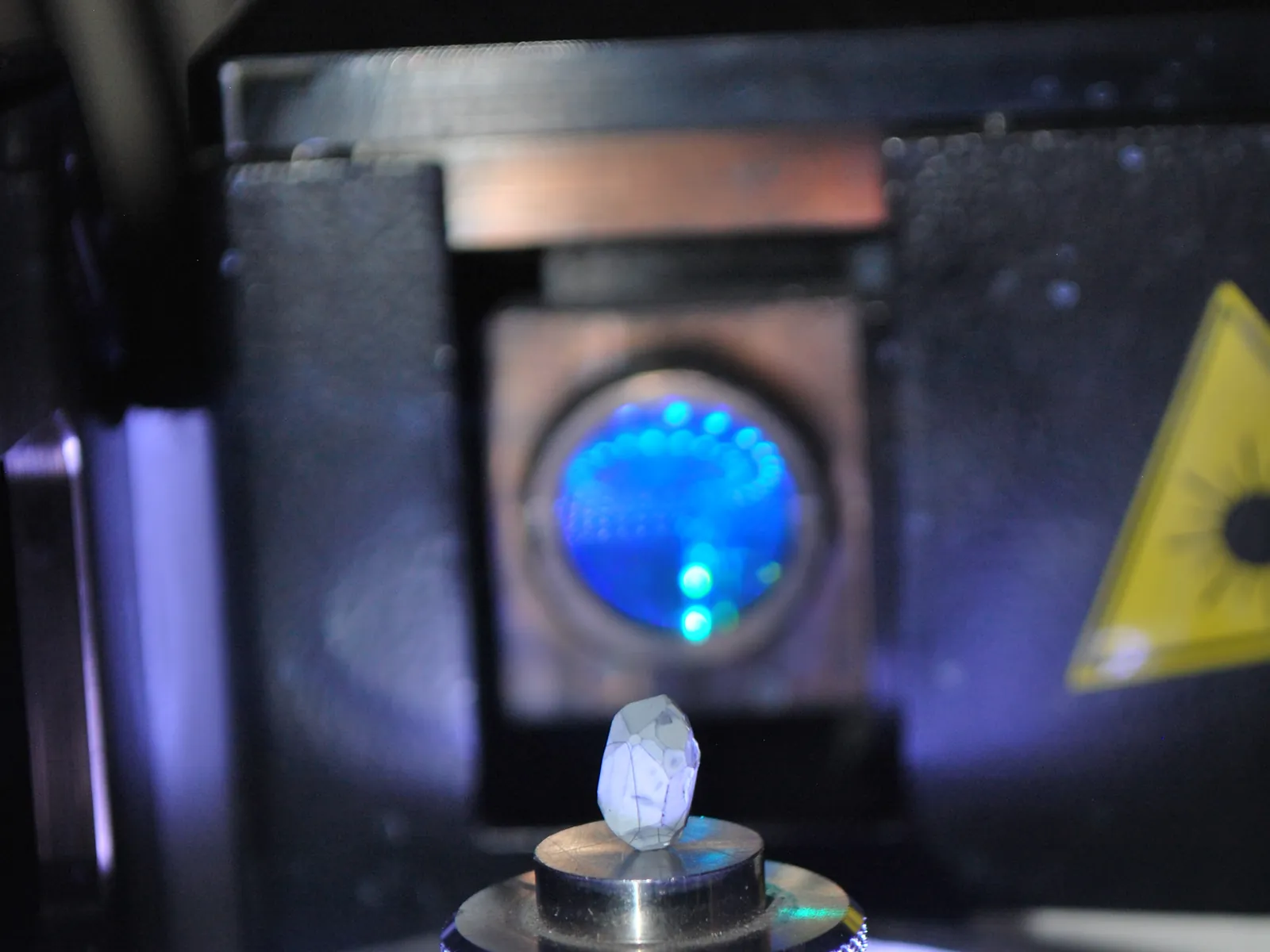
Plan
Choose what to retain.
A planner considers possible polished shapes, weight retention and the effect of internal characteristics. The goal is a useful finished stone, rather than the largest stone at any cost.
A proposed cut, selected before material is removed.
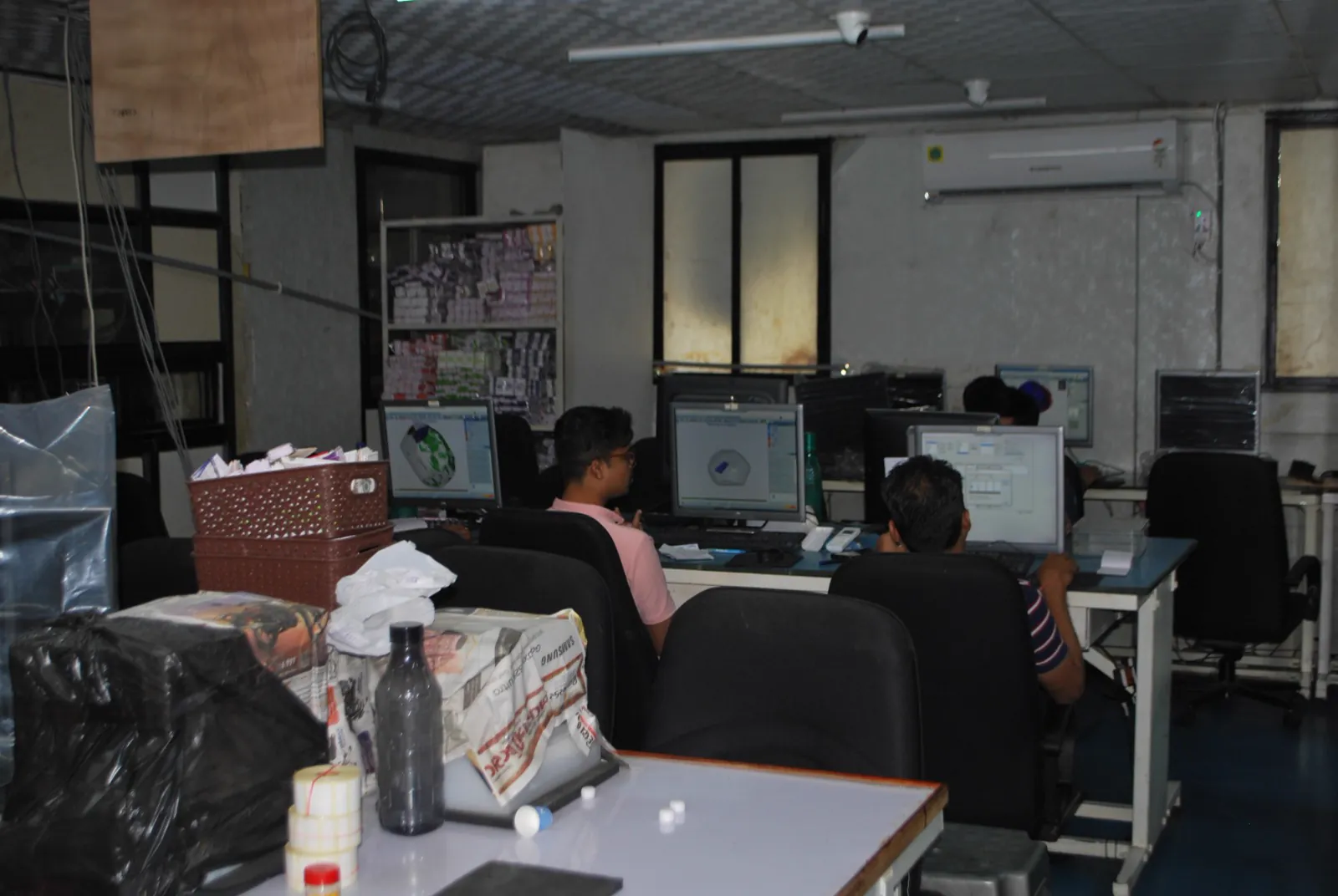
Cut
Follow the chosen plane.
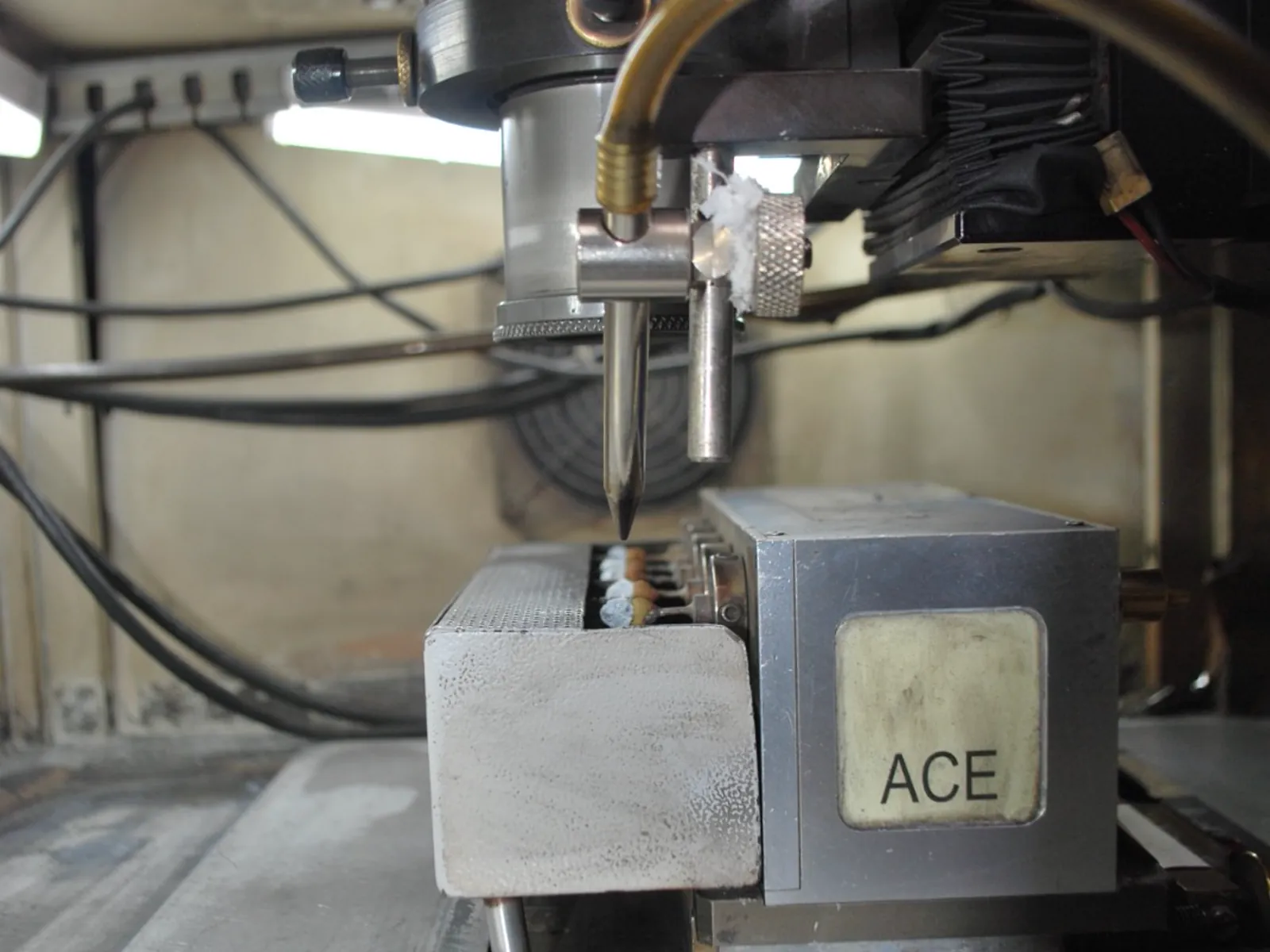
Laser sawing separates the material along planned paths. The orientation of the rough and the manufacturing plan determine how each piece is prepared for further work.
A separated piece ready for shaping.
Shape
Establish the outline.
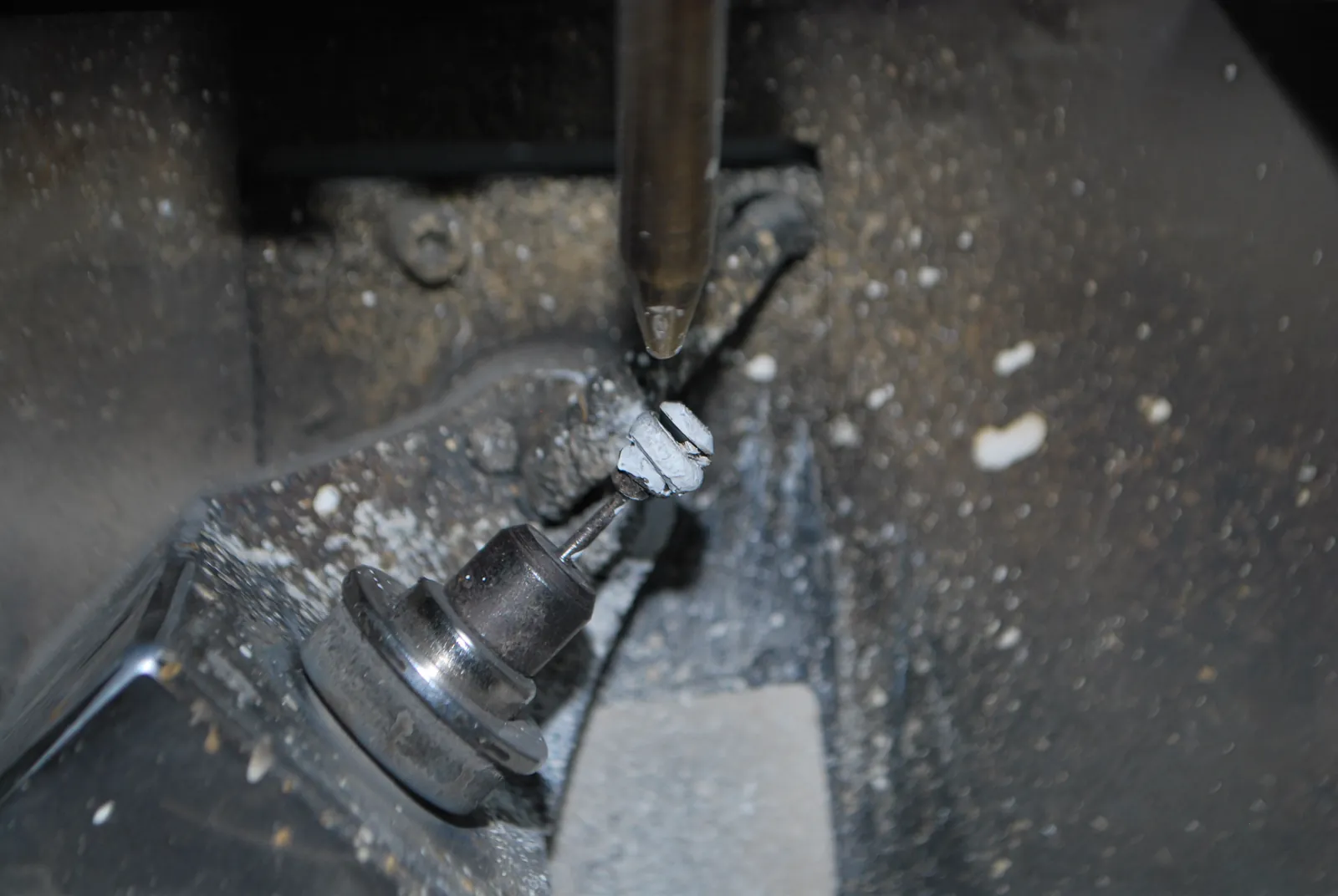
Shaping establishes the outline and prepares the girdle. For round stones, bruting produces the circular form; fancy shapes require their own approach to outline and symmetry.
A preform with the intended silhouette.
Polish
Work one surface at a time.
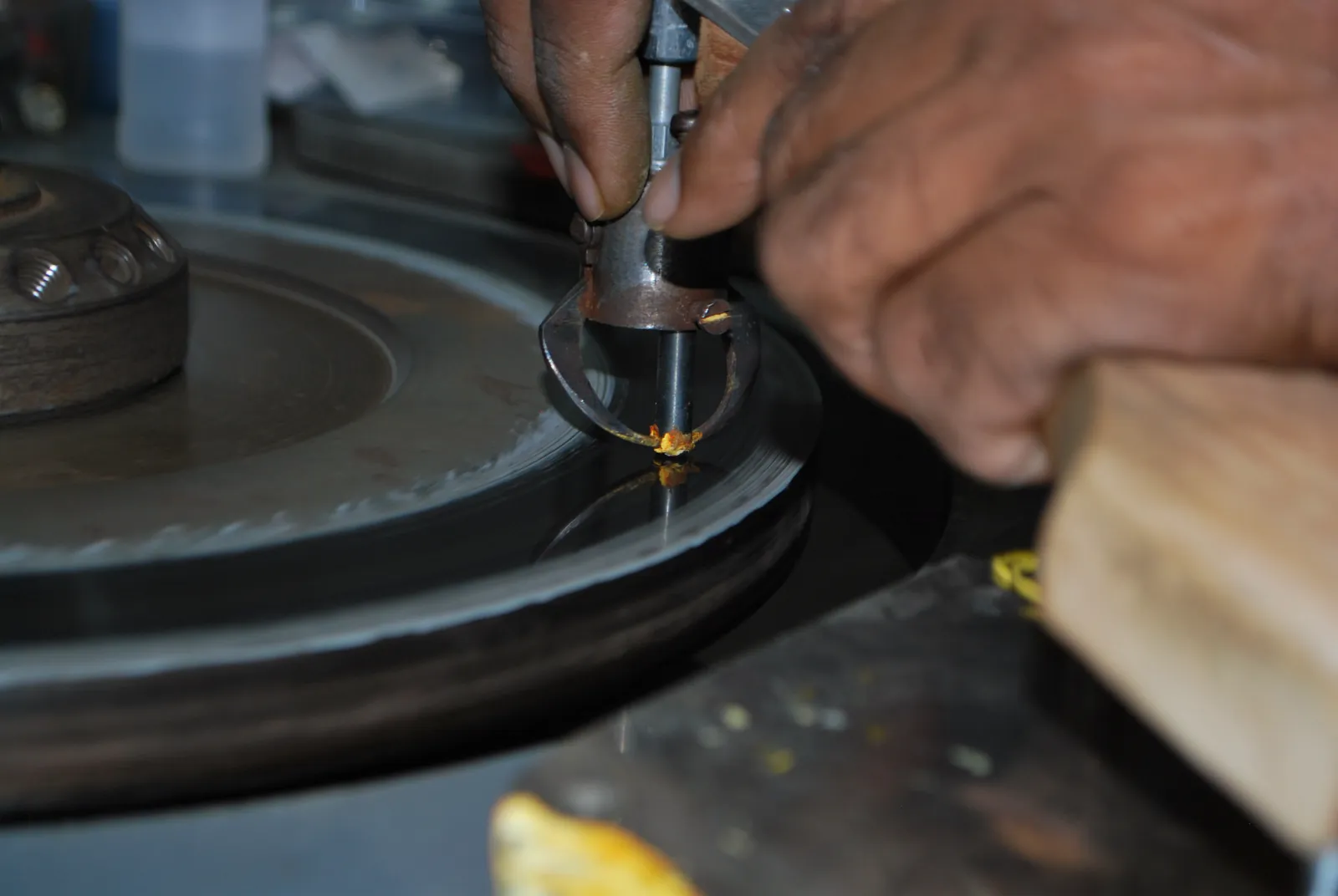
Facets are established and finished at the polishing wheel. Orientation, pressure and repeated inspection guide the craftsperson. Each surface contributes to the way light moves through the finished stone.
The finished arrangement and surface of the facets.
Inspect
Look again. Then look closer.
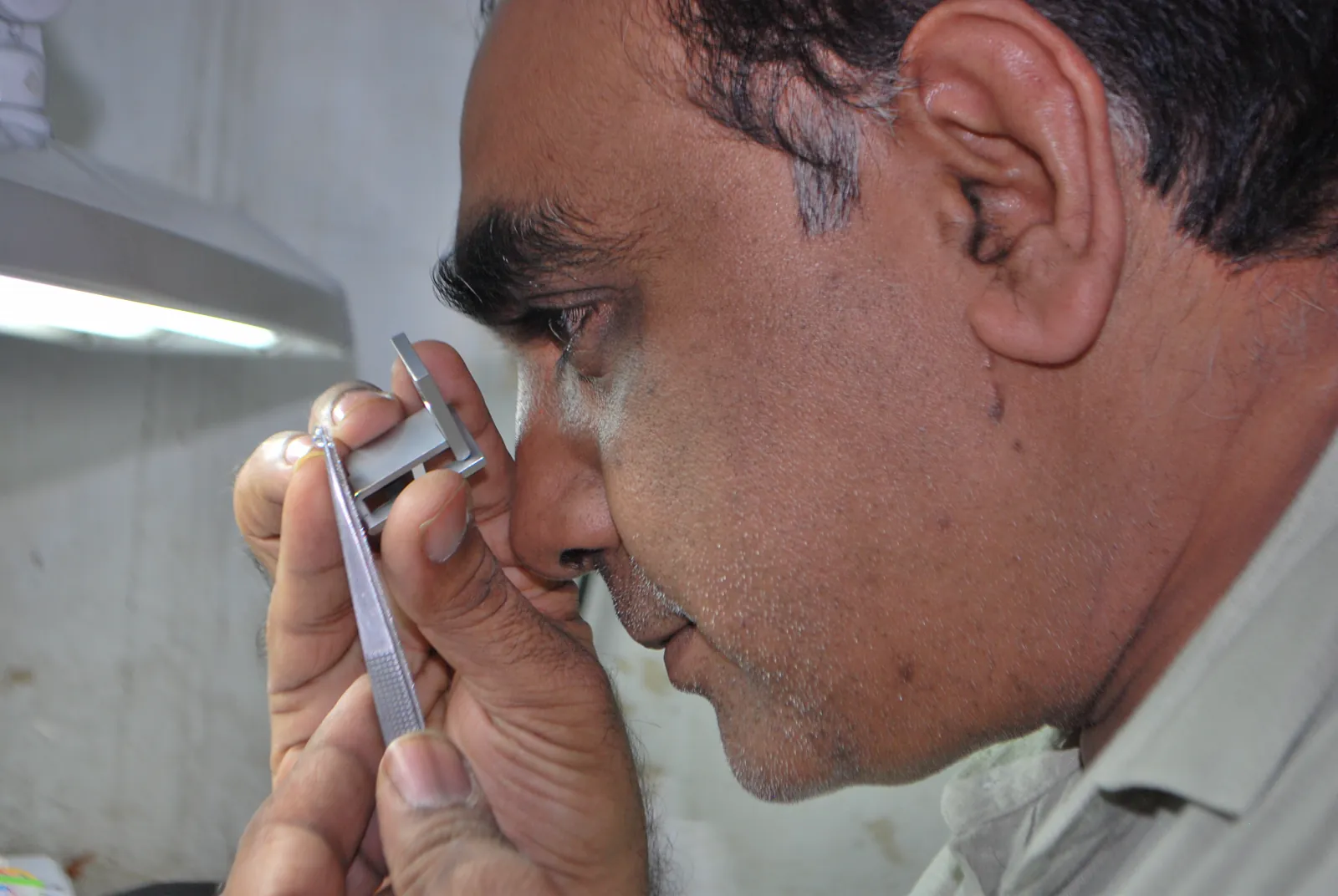
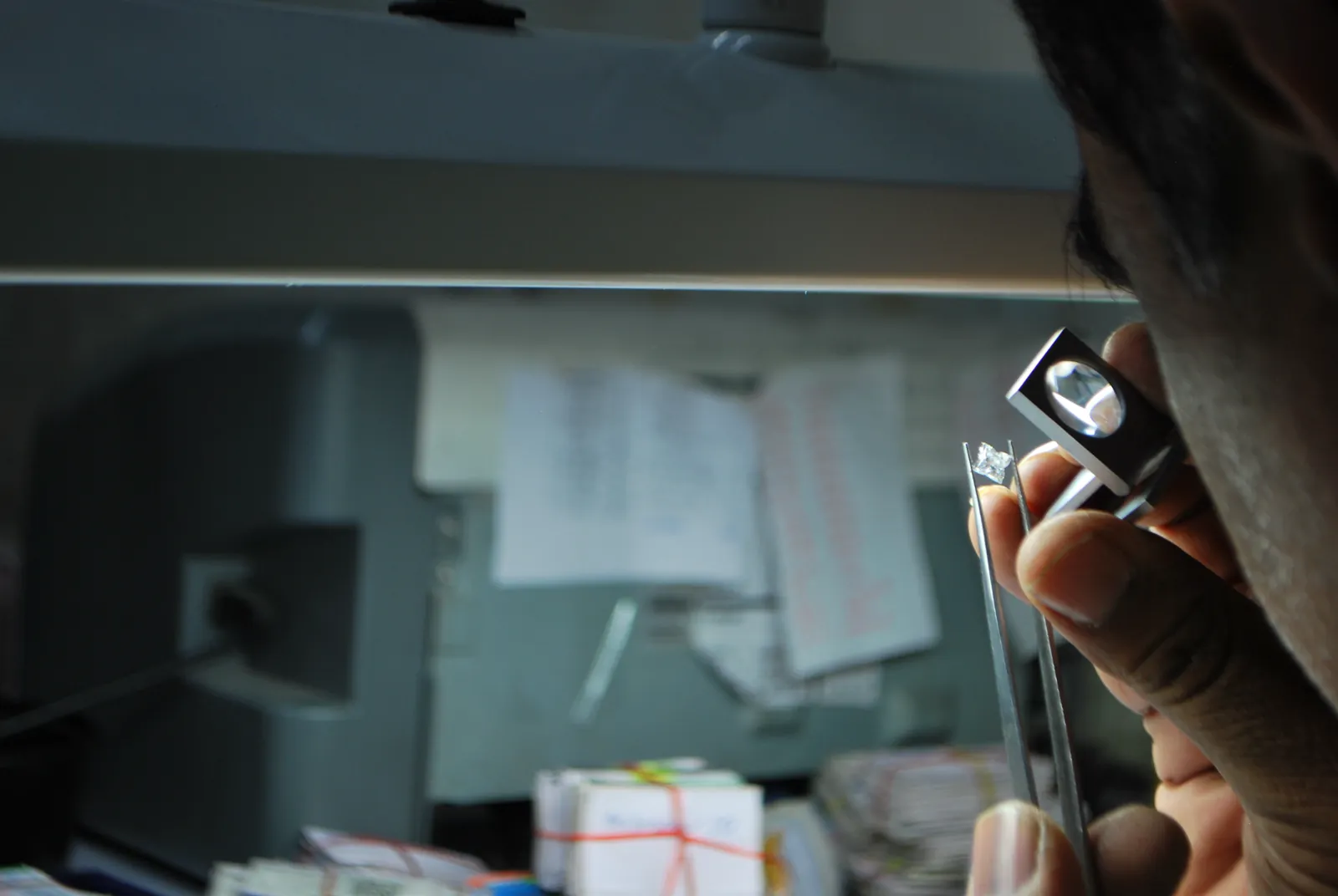
Internal quality control examines workmanship, measurements and appearance against the order. Polish, symmetry and the overall finish are reviewed before the stone proceeds.
A checked diamond and the details needed for the order.
Independent grading
Let the report identify the stone.
Independent laboratory assessment is separate from our internal quality control. For individually reported stones, check the issuer, report details and any inscription against the diamond supplied.
Documentation and disclosure accompanying the finished stone.
An inside view
The stone
within the stone.
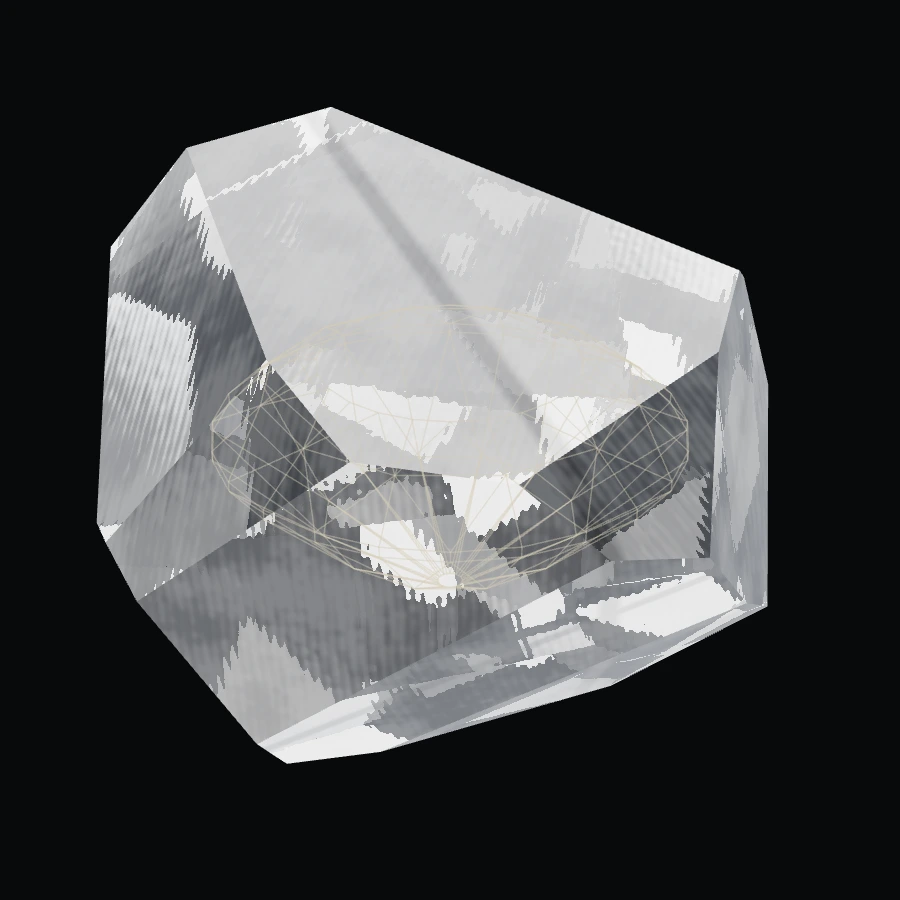
Move through this representative rough to see the proposed finished shape. Planning considers where useful material can be retained and how internal features may influence the cut.
Illustrative geometry and inclusion positions. This is not a scan, grading simulation or yield calculation.
Start a conversation